Aviation Support for Humanitarian Missions: How H3Operations Works in Africa
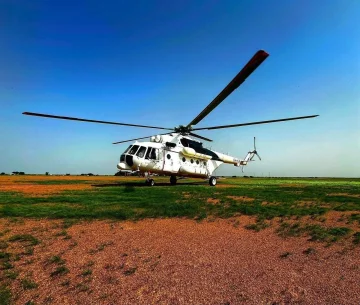
Remote areas, difficult terrain, limited infrastructure and vast distances: in conditions like these, international humanitarian missions in Africa need aviation support. H3Operations, a Ukrainian airline, operates in Central and East Africa, transporting personnel and cargo and performing specialized tasks for international organizations.
Eight H3Operations helicopters are currently deployed on the African continent. Over five years, the company's crews have worked in more than ten African countries on assignments for international humanitarian missions.
Operating in Diverse Geographic and Climatic Conditions
For an aviation operator, operating conditions in Africa vary considerably from one region to another. Crews may face high temperatures and humidity, tropical downpours, drought, desert, dust and sandstorms. Mountainous terrain, jungle, savanna and remote areas with limited infrastructure each bring their own challenges.
"There is no such thing as a single set of operating conditions across Africa. On top of that come health and safety issues for personnel: tropical diseases, dangerous insects and animals, and difficult living conditions," explained Vladyslav Klipachenko, Director of H3Operations.
In such conditions, a helicopter is more than a means of transport. It becomes part of an international mission's logistics, moving personnel and cargo between remote areas and carrying out tasks where ground transport can't easily reach.
According to Vladyslav Klipachenko, virtually the entire H3Operations team is involved in the African operations, from pilots and engineering and maintenance personnel/staff/specialists to operations managers deployed to the country of operation.
"A helicopter can't simply fly into another country and start work the next day. Every contract like this involves a long and complex process. A helicopter must be its continuing airworthiness must be maintained in accordance with applicable requirements, no matter where it is. That's why the logistics of spare parts, equipment and technical personnel are a critical part of any contract or mission. And that's why we send experienced pilots, engineering and technical specialists and operations managers to work in Africa. This is work where professional experience truly makes the difference," he emphasized.
Dozens of Specialists Behind Every Operation
Before an operation begins, the company must demonstrate its capability to perform the required aviation services.
"Once a contract is awarded, we have to prepare the aircraft, the crews and the engineering and technical personnel. We organize the helicopter's ferry flight, the delivery of equipment and spare parts, logistics, accommodation for personnel and ground support in the country of operation. Only after all of that do the actual flights begin. So behind every H3Operations helicopter working in Africa is the work of dozens of specialists from various departments and services," explained Vladyslav Klipachenko.
According to the Director of H3Operations, the ability to work under contracts with international humanitarian organizations is the result of a long process that requires focused effort and time. It all starts with obtaining an Air Operator Certificate. The company must then establish an effective operational management framework, introduce quality and flight safety management systems, develop the necessary documentation and procedures, train flight and engineering personnel, ensure a proper maintenance system, and accumulate operational and international experience.
To take part in international tenders, a company must provide documented proof of its ability to perform the relevant type of aviation work safely and consistently.
To confirm compliance with the applicable requirements, H3Operations regularly undergoes international audits and inspections, and its personnel receive ongoing training in line with current international and national requirements.
International Missions Under the Ukrainian Flag
Ukrainian crews continue to carry out international missions during the full-scale war.
"Our crews work thousands of kilometers from home. They represent Ukraine and carry out international humanitarian missions, all while knowing that the war continues in Ukraine, people are dying and infrastructure is being destroyed. It's impossible for a Ukrainian team to fully detach from that. I deeply respect our people for remaining professionals and doing their job well even under these circumstances," said the Director of H3Operations.
He noted that the work in Africa is important to the company because it allows it to represent Ukraine on the international aviation market.
"It's especially important to us that H3Operations actively represents Ukraine both in the international humanitarian community and on the international aviation market. Our helicopters carry out international missions under the Ukrainian flag. Together with other Ukrainian airlines that have endured, preserved their capabilities and continue to grow during the full-scale war, we are showing the world the high professional standards of Ukrainian civil aviation", emphasized Vladyslav Klipachenko.
Work in Africa demands constant focus, rapid situational assessment and sound, timely decision-making.
"Weather conditions can change very quickly. Add remote airfields and landing sites, difficult terrain, and limited infrastructure and logistics, and it becomes clear how important a crew's experience and training are," added the Director of H3Operations.
Every flight is tied to a specific task and a specific responsibility. When it comes to international humanitarian missions, what matters most to the team is the result: the successful completion of the mission, and sometimes a human life saved.
"But I never tire of repeating this: behind every successful flight is not just the crew we see in the helicopter cockpit. Behind it is the entire H3Operations team: engineering and technical staff, flight safety specialists, logisticians, operations managers, administrative and other personnel. Each of them is part of the final result. In complex aviation, no role and no process is insignificant. The outcome of a mission is the product of the whole system working together. And perhaps that is what best defines H3Operations: our result is a team result," said Vladyslav Klipachenko.