How HUMS Is Changing the Operation of Mi-8/17 Helicopters: MC AVIA-GRADE’s Experience Integrating Modern Systems into Soviet-Era Helicopters
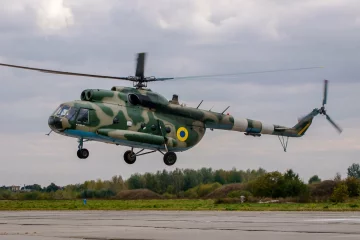
For more than a decade, the Ukrainian military has been operating equipment inherited from the Soviet Union. Despite their age, these helicopters remain in service, but they require not only repairs but also comprehensive modernization — from upgrading individual systems to installing modern technical monitoring solutions.
Modern health monitoring systems make it possible to detect potential helicopter malfunctions before they develop into serious failures. One such system is the Health and Usage Monitoring System (HUMS). Engineers at “MC AVIA-GRADE” were the first to integrate this system into an Mi-8MTV helicopter. Politeka journalists spoke with Oleksandr Nahapetyan, Deputy Director of “MC AVIA-GRADE,” and asked him how HUMS works, how the system is changing aircraft operations, and why integrating it into Soviet-era helicopters is a complex engineering challenge.
What Is HUMS and How Does It Work?
HUMS is a comprehensive onboard system for monitoring the technical condition and operation of an aircraft, primarily used on helicopters. Its main purpose is to automatically collect data on the operation of the helicopter’s most important components in order to ensure flight safety and optimize maintenance costs.
As the Deputy Director of “MC AVIA-GRADE” explained, the system manufactured by American company GPMS International monitors not only the technical condition of individual components but also the way the helicopter itself is operated.
In particular, HUMS uses a network of accelerometers to monitor vibration levels in engines, gearboxes, the transmission system, as well as the main and tail rotors. Such data makes it possible to detect microcracks and wear in moving gearbox components long before they lead to equipment failure. The system also collects data on rotor blade operation and determines whether the blades require balancing or additional adjustment. This is important for reducing overall vibration and structural loads on the helicopter.
Another area covered by HUMS is monitoring operating conditions and loads. The system records how much time the helicopter has spent in extreme or demanding operating modes, for example, whether it has performed hovering operations at maximum load.
HUMS also tracks the actual accumulation of metal fatigue in critically important components. As a result, the condition of parts is assessed not only based on calendar time or flight hours, but also taking their actual wear into account.
Why This Matters for Mi-8/17 Series Helicopters
According to Oleksandr Nahapetyan, Soviet helicopters were designed according to a very different technological philosophy.
“The basic design of the helicopter was created more than 60 years ago, when digital in-flight diagnostics were not yet a consideration, and parameter recording was limited to ‘black boxes.’ Therefore, installing a modern HUMS complex fundamentally changes the approach to operating these helicopters,” he explained.
According to him, the design of Mi-8/17 series helicopters includes several critically important and highly loaded components that HUMS continuously monitors using a network of smart sensors that collect data throughout the flight.
“Using an internet connection, the data is transmitted to a ‘data cloud,’ where all information on the performance indicators for the entire operational period of a particular helicopter is stored. Statistics on historical indicators and analysis of completed flight parameters make it possible to assess whether actual measurements correspond to baseline indicators or reference values. This makes it possible to monitor the actual operating condition of equipment through continuous ongoing analysis and make decisions regarding engineering or maintenance intervention when it is actually necessary,” said the Deputy Director of “MC AVIA-GRADE.”
For the operator, this means the potential for fewer emergency repairs and periods of downtime, more accurate maintenance planning, and a lower risk of sudden failures caused by hidden defects.
First HUMS Integration on an Mi-8MTV in Ukraine
“MC AVIA-GRADE” was the first company in Ukraine to install a modern full-function HUMS manufactured by GPMS International on a helicopter from the Mi-8/17 series. The work was completed in late 2021 in Zaporizhzhia.
As Oleksandr Nahapetyan explained, “MC AVIA-GRADE” specialists carried out engineering calculations, physical installation, integration of the system into the helicopter’s main components, and certification tests.
As a result, the system received official approval from Ukrainian regulatory authorities for installation on Mi-8/Mi-17/Mi-171 helicopters. As the Deputy Director of “MC AVIA-GRADE” emphasized, this opened the way for the potential modernization of both civilian Ukrainian helicopters — for example, those performing missions under UN humanitarian programs — and improved technical monitoring of military aviation aircraft.
“Installing a modern HUMS system on Soviet-era equipment such as the Mi-8/17 is a highly complex task. In terms of engineering challenges, it can be compared to integrating the autopilot from a modern Tesla into a classic car from the 1970s or 1980s. The main difficulty lies in the fundamental difference between the technological generations: the Soviet aircraft design school was based on mechanics and analog instruments, whereas modern monitoring is a fully digital ‘cloud’ ecosystem,” Oleksandr Nahapetyan explained.
Why Is Installing HUMS on a Soviet Helicopter So Difficult?
At first glance, HUMS integration may appear to involve simply installing additional sensors and connecting software. However, as the Deputy Director of “MC AVIA-GRADE” notes, it is actually a complex engineering project that requires taking into account the specific design of the helicopter, its components, onboard systems, and communication equipment.
One of the main challenges engineers face is the lack of designated mounting points for modern sensors. Any modification to the design of helicopter components, even drilling a hole for an M6 bolt to attach a sensor, requires additional structural strength calculations. As a result, engineers have to develop specialized, unique mounting solutions.
Another challenge is configuring the transmission of digital data from the helicopter. Modern HUMS operates as an integrated digital system, while the Soviet helicopter’s original communication systems were not designed for this type of data exchange. Therefore, a solution had to be developed that would allow the new capabilities to be integrated into the existing onboard architecture.
Modernization Must Be Comprehensive
“MC AVIA-GRADE” emphasizes that modernizing aviation equipment should not be limited to replacing a single instrument or installing an individual system.
“Comprehensive modernization of an aircraft today is not simply a matter of convenience or updating the appearance of the cockpit. It is a critical necessity for the survival and effectiveness of equipment in the air, especially when it comes to Soviet platforms such as the Mi-8/17. Replacing individual instruments with more modern ones does not provide a comprehensive effect and only improves operation with respect to a single parameter. The integrated approach offered by ‘MC AVIA-GRADE’ fundamentally changes the capabilities of the aircraft,” said Oleksandr Nahapetyan.
For example, highly advanced navigation systems require upgrades to communication systems, while a package of new equipment requires a more sophisticated power supply system. If new technologies are integrated without ensuring compatibility between them, this can make the crew’s work more difficult, as they would have to operate different instruments, displays, and controls based on different operating principles at the same time.
“MC AVIA-GRADE’s” experience covers not only HUMS integration but also repairs and comprehensive upgrades of control, navigation, monitoring, communication, and health-monitoring systems. This enables Ukrainian helicopters to perform UN missions or participate in joint operations with Western partners. The company works with various types of aviation equipment, has its own design bureau and production capabilities, and has experience undergoing regulatory and certification procedures.
“The main strength of ‘MC AVIA-GRADE’ as an engineering company lies precisely in its ability to take a project through its entire life cycle — from the initial technical concept to certification and operation. The ability to work with Soviet helicopters and integrate advanced Western technologies is an extremely important skill in itself, but without the company’s unique expertise in aviation law and certification, this would not make it possible to deliver these solutions to aviation operators,” Oleksandr Nahapetyan explained.
HUMS is an example of how modern digital technologies can transform the approach to operating aviation platforms created decades ago. But the system itself is only one part of this process. Its integration requires engineering calculations, an in-depth understanding of the helicopter’s design, work with technical documentation, testing, and certification.
It is precisely the combination of these competencies that makes it possible to modernize existing aviation equipment without losing its core capabilities, while adding a modern level of monitoring, predictive maintenance, and technical support.