How Russia Fell Off FATF’s Agenda: Examining Problems at the State Financial Monitoring Service
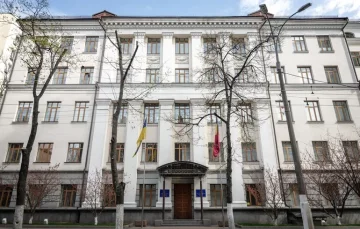
From 15 to 19 June, Paris hosted another week of meetings of the Financial Action Task Force (FATF), the international anti-money-laundering body. Yet the State Financial Monitoring Service, the agency responsible for cooperation with FATF in Ukraine, once again failed to deliver results: FATF issued no new statement condemning Russia, writing ZN.
For Ukraine, FATF sessions are a good opportunity to step up pressure on the aggressor state and to set out, for representatives of international organisations and FATF's 37 member countries, the threat Russia poses—to international financial security, and through the financing of terrorism and the proliferation of weapons of mass destruction.
Unfortunately—and partly because of the State Financial Monitoring Service—the risks and threats emanating from Russia were not in the spotlight at FATF’s latest session. Nor were they at the previous meetings, held in Paris and Strasbourg in 2025 and in Mexico in February 2026.
In its closing communiqué following the June session, FATF does not condemn Russia’s armed aggression against Ukraine.
“The FATF suspension of the Russian Federation continues to stand (see February 2024 statement),” FATF notes.
That is, the only mention is of the membership suspension decision, which has now been in force for three years. No separate public FATF statement on Russia—a regular practice in 2022–2024—was approved either.
Inaction at the State Financial Monitoring Service
Recall the scandal over the prolonged absence of the head of the State Financial Monitoring Service, Filip Pronin, from his workplace in the first quarter of this year—including a fruitless 12-day trip to the FATF session in Mexico. For that FATF session there is no information whatsoever about any work by the State Financial Monitoring Service to secure an outcome favourable to Ukraine. The Service’s website carries not a single news item about its participation in the FATF session—even though this is a key international event in the field of financial monitoring.
Because of the State Financial Monitoring Service’s systematically passive stance, FATF’s interest in further sanctioning Russia is fading, even though this is extremely important: adding Russia to FATF’s “blacklist” could substantially curtail its financial capacity to wage war against Ukraine.
The State Financial Monitoring Service’s failure to deliver at FATF can also be explained by the fact that its own leadership is suspected of involvement in laundering dirty money. Indeed, on the eve of the FATF sessions, on 10 June, NABU and SAPO carried out searches at the State Financial Monitoring Service. The searches were probably related to the case concerning the construction of fortifications in the Donetsk region, on which the former heads of the Poltava Regional Military Administration, Filip Pronin and Bohdan Korolchuk—who now run the State Financial Monitoring Service—laundered 200 million hryvnias.
This is not the first such episode. In October 2025, NABU searched the home and car of the first deputy head of the State Financial Monitoring Service, seizing cash ($278,050 and 3.343 million hryvnias) along with materials that may point to the running of a conversion center—namely registration and statutory documents, seals and powers of attorney of business entities (11 Ukrainian legal entities; 12 sole proprietors; seven foreign companies; structures registered in Cyprus; companies from the Czech Republic; firms in the British Virgin Islands).
Clearly, the NABU and SAPO investigations into the current leadership of the State Financial Monitoring Service are also on the radar of international partners, who in their negotiations with Ukraine often put anti-corruption issues front and center. This, too, affects the position of FATF and other international organizations towards the State Financial Monitoring Service—and, consequently, towards Ukraine as a whole.ф