The War Could Freeze Even Without an Agreement, Expert Says on CIA Director’s Proposal
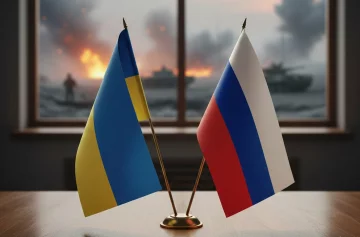
Political expert and Ukrainian Armed Forces serviceman Oleksandr Musiienko commented on the CIA director’s visit to Moscow and his closed-door meeting with Putin, and assessed whether Russia would accept the peace proposals.
He spoke about this in his blog.
“The CIA director has already traveled to Moscow; the last time was in 2021, on the eve of Russia’s full-scale invasion of Ukraine. At the time, it was William Burns, a former U.S. ambassador to Russia. He already knew Putin and Lavrov and had worked as a diplomat at the State Department before becoming CIA director. Accordingly, he was chosen to try to persuade Putin not to launch a full-scale invasion. As we can see, that attempt failed. Later, Burns met with Naryshkin, the head of Russian intelligence, in Turkey or third countries. So, the very idea of involving the CIA director in diplomatic work is not new,” Oleksandr Musiienko explains.
According to the Wall Street Journal, he notes, the reason for the visit is that Russia is preparing a mobilization and may test NATO’s borders, meaning that the issue concerns not only intensifying the offensive against Ukraine but also potential actions against the Baltic states and Northern Europe. Iran and the Russian-Ukrainian war were also discussed.
In particular, the expert explains, this is connected to the idea of a maritime ceasefire, to which Russia is adding a condition concerning its oil refineries. In that case, he argues, the proposal should also be expanded to include Ukraine’s energy infrastructure, gas production facilities, thermal power plants, and the southern regions in general.
“The idea is to stop hostilities along the border between Russia and the Sumy and Kharkiv regions, effectively localizing the war to Donetsk region. The goal is to confine the war exclusively to ground combat in the east. That would mean stopping naval and air warfare, limiting strikes to tactical drones, and confining Russia’s offensive campaign to ground operations. At the same time, Russia would not stop hostilities, while the West would be prepared to compromise.
The expectation is that we could end up with something resembling ATO–JFO 3.0. We remember that fighting in the east was less intense at the time than it is now: there were fewer assaults, aircraft were not used, there were no guided aerial bombs, and there was not the same saturation with drones — the conditions and types of weapons were different.
And now there is hope that limiting the fighting exclusively to ground operations could lead to the war gradually losing momentum and eventually declining. In other words, the war could reach a frozen state even without an agreement,” Oleksandr Musiienko explains.
Thus, he concludes, the negotiation track is becoming more active, but the coming days and weeks will show, based on the exchange of strikes, where things are heading.
On the one hand, the expert notes, Ukraine has received Patriot systems, Congress may vote on the Lindsey Graham bill, and the United States may announce that it will provide Ukraine with more weapons and assist with attacks — especially given that Trump is soon due to meet with Xi Jinping and the U.S. midterm elections are approaching.
On the other hand, Putin is obsessed with the war, and there are doubts that he will accept these proposals.